

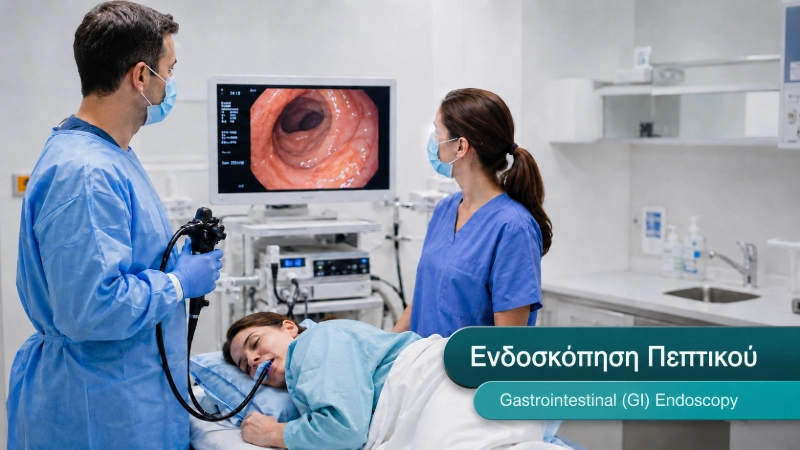
Gastrointesinal (GI) Endoscopy
Department of Digestive Endoscopy
Care and safety in every endoscopic examination
At DIKTEON Medical Diagnostic Center, we offer specialized gastrointestinal (GI) endoscopy services, including upper digestive (gastroscopy) and lower digestive (colonoscopy). . These tests are critical for the diagnosis and monitoring of many gastrointestinal conditions, helping to prevent and treat serious health problems early.
Specialised Doctors YESY
What are Gastrointestinal (GI) Endoscopies?
Gastrointestinal endoscopies are medical procedures that allow doctors to look inside the organs of the digestive system. By using an endoscope – a thin, flexible tube with a camera and light at the tip – doctors can see detailed images of the inside of the digestive tract and detect any abnormalities.
Colonoscopy
A colonoscopy is an examination that allows doctors to see the inside of the large intestine (colon) and rectum. It is one of the most important tests for preventing and diagnosing colorectal cancer.
Conducting a colonoscopy is important for:
- Cancer prevention: Colonoscopy can detect and remove polyps before they develop into cancer.
- Disease Diagnosis: allows the diagnosis of disorders such as inflammatory bowel disease (e.g. ulcerative colitis, Crohn’s disease) and other diseases of the colon.
- Symptom assessment: helps to assess symptoms such as unexplained bleeding, chronic diarrhoea and abdominal pain.
Gastroscopy
Gastroscopy is an examination that allows doctors to see the inside of the oesophagus, stomach and duodenum. It is important for diagnosing and monitoring diseases of the upper digestive tract.
Performing a gastroscopy is important for:
- Disease Diagnosis: allows the diagnosis of gastritis, ulcers, gastroesophageal reflux disease and stomach cancer.
- Bleeding detection: Helps to detect the cause of unexplained anaemia or bleeding from the upper digestive tract.
- Symptom assessment: used to assess symptoms such as stomach pain, difficulty swallowing and persistent nausea or vomiting.
Diagnosis of Helicobacter Pylori infection
The Department of Digestive Endoscopy offers the possibility of rapid and reliable detection of Helicobacter Pylori infection, using all scientifically documented methods, both invasive and non-invasive:
- CLO test (during gastroscopy)
- Stool antigen tests (Hp Ag Test)
- Detection of antibodies in the blood (in our clinical laboratory)
Advanced Endoscopic Techniques
The department has a pioneering endoscopic technique, chromoendoscopy, which allows enhanced visual diagnosis of diseases of the digestive system. We also have modern video endoscopy units with the ability to take high-quality photographs for the documentation of endoscopic diagnosis.
Endoscopic Services offered:
The following diagnostic and interventional operations are performed in the department:
- Diagnosis and treatment of upper digestive diseases (oesophagus, stomach, duodenum)
- Diagnosis and treatment of small bowel diseases
- Diagnosis and treatment of lower digestive diseases (colon, rectum)
- Diagnosis of upper and lower digestive diseases without the use of endoscopes – Capsule Endoscopy (Capsule Endoscopy)
Equipment and Safety:
The endoscopy room is fully equipped with the latest digital endoscopes and endoscopy tower. It has:
- Digital electronic image and video recording systems for all endoscopic procedures
- Modern automatic cleaning and disinfection system for endoscopes, which guarantees patient safety.
- Modern anaesthesia machine with vital signs recording system (pulse, blood pressure, respiratory rate) during endoscopy
- Resuscitation unit with 2 beds, continuously monitored by nurses
- Special area for disinfection of endoscopes after each endoscopic procedure, with a modern washing machine of high standards
The skill and experience of our doctors, as well as our specialized nursing staff, guarantee the examination is carried out with comfort and safety in a friendly and pleasant environment.